Civics/Government
Help your child to become an active citizen by incorporating civics education into your homeschooling plan. Learn about the federal and Ohio government, how to contact your legislators, how government works, and more.
Activities & Experiments
TeenPact Leadership Schools
TeenPact is a dynamic, hands-on leadership school for Christian students. Their mission is to train youth to understand the political process, value their liberty, defend their Christian faith and engage the culture at a time in their lives when, typically, they do not care about such things. The core program consists of the State Classes offered around the country.
How to Create a Midde School/High School Political Science Club
Tips for creating a political science club.
H.E.A.R.T.S. - Homeschoolers: Educating, Assisting, & Reaching-out Through Service
H.E.A.R.T.S.' goal is to join together a diverse and inclusive group of homeschoolers in community service projects – to increase public awareness, understanding, and acceptance of homeschoolers and homeschooling through combined service, outreach, and public relations efforts.
Teaching Tips & Ideas
TeenPact
TeenPact is a comprehensive leadership experience that challenges students to grow both personally and spiritually. During TeenPact, students meet and interact with other Christian young people and leaders from across their state. The first step in the TeenPact Leadership School is the State Capitol Four-Day Class for ages 13-18. Here students learn about the political process and the basics of state government. The students then move onto a behind the scenes look at how their state government works. Workshops focus on the political process, parliamentary procedure, public speaking, and the bill-to-law legislative process.
H.E.A.R.T.S. - Homeschoolers: Educating, Assisting, & Reaching-out Through Service
H.E.A.R.T.S.' goal is to join together a diverse and inclusive group of homeschoolers in community service projects – to increase public awareness, understanding, and acceptance of homeschoolers and homeschooling through combined service, outreach, and public relations efforts.
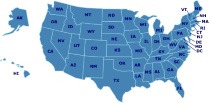
Looking for Another State?
Featured Resources
As an Amazon Associate, we earn from qualifying purchases. We get commissions for purchases made through links on this site.
The Story of the World
This book series by Susan Wise Bauer is another that is best enjoyed as a read aloud rather than seen as a history textbook. It is full of engaging stories, mixing facts and historical legends. The companion study guides offer questions, narration exercises, activities, crafts, and reproducible pages. There are also lists for each chapter of supplemental books that are easily found at your local library.
Story of the World: History for the Classical Child, Volume 1: Ancient Times (From the Ear...
Noah Webster's Reading Handbook
This is the historic text (originally called the Blue-Backed Speller) that has been updated to teach phonics/beginning reading. The blends and words in this reader are arranged to correlate with the sequence in which the special phonics sounds are taught. This reader is an invaluable teaching tool for children who need extra practice in the application of phonics rules. Find out more here.

Creative Home Schooling: A Resource Guide for Smart Families
For a comprehensive guide to home-based education, that does not promote any particular curriculum or religious view, this is one book parents should buy! Parents will appreciate practical advice on getting started, adjusting to new roles, designing curriculum that is both child-centered and fun, and planning for social and emotional growth. Parents will turn to their favorite chapters again and again. Features interviews and tips from many homeschool parents as well as long lists of resources...

Flip Over Math Manipulatives
Grades 1-5. Tub of over 500 manipulatives includes Pattern Blocks, Connecting People, Cuisenaire Rods, Coins, and Bean Counters and can be used with the Flip Over Math Books. This 49 page book (others sold separately) is written to NCTM Standards and provide hands on activities from basic math skills to advanced problem solving.
A History of Science
A History of Science is not a textbook, but is a guide to help parents and children study science through literature. It is intended for children in elementary grades.